Photo Gallery
* Al-Kharabsheh: Energy transition is no longer an option, but a strategic necessity to enhance Jordan’s energy security
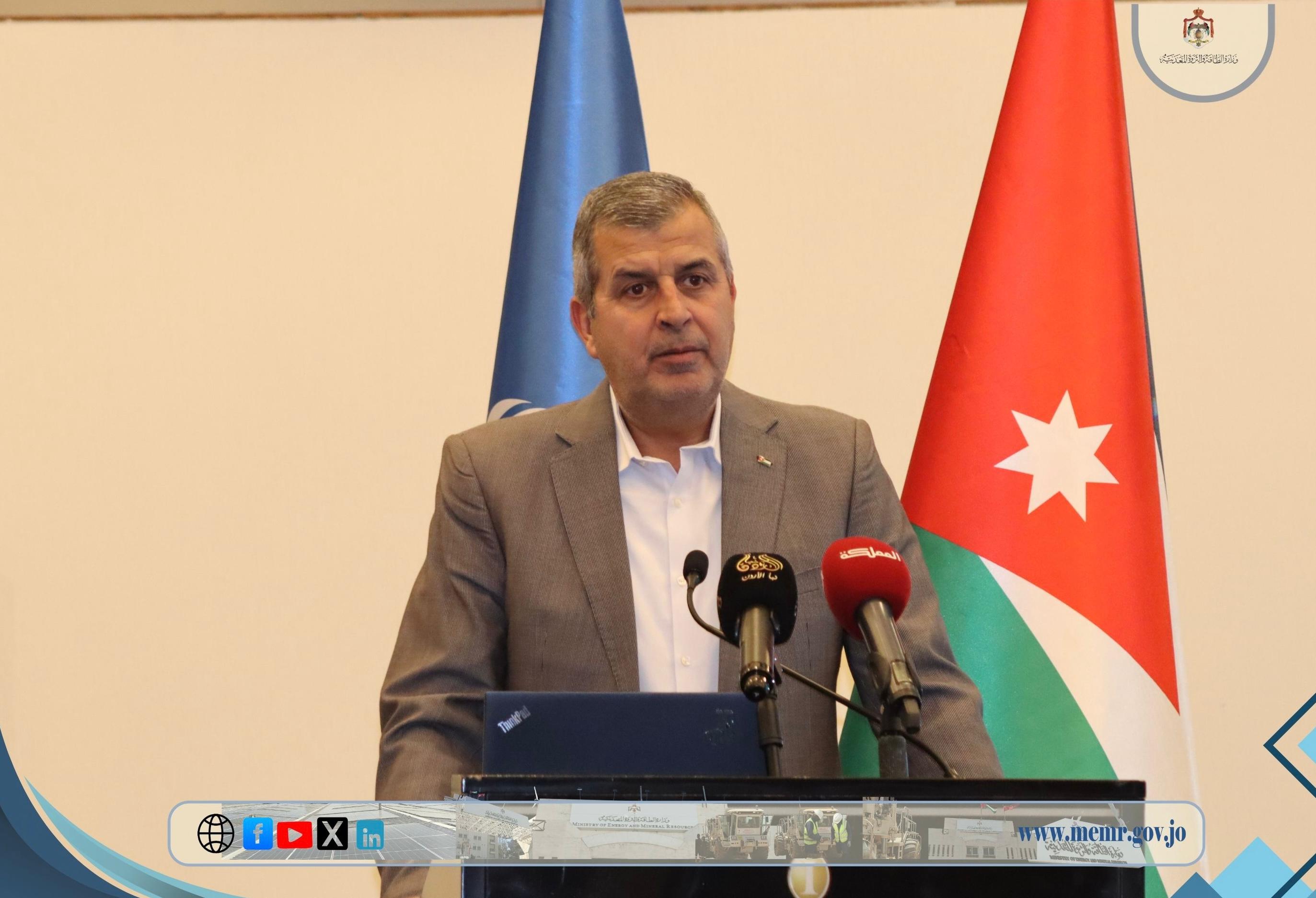
16 April 2026 – Minister of Energy and Mineral Resources, Dr. Saleh Al-Kharabsheh, on Thursday sponsored the launch of the National Dialogue Workshops aimed at supporting policies in the field of energy transition, enhancing coordination between government entities and the private sector, and discussing regulatory and financing challenges to accelerate the implementation of clean energy projects. The workshops are being held under the Sustainable Energy Investment Accelerator initiative, implemented through the United Nations Development Programme.
In his opening remarks, Al-Kharabsheh stated that the workshop represents an important platform for strengthening cooperation among all stakeholders in the energy sector, particularly in light of the current regional and global developments and their impact on various sectors, including energy.
He stressed the need to accelerate investment in sustainable energy and adopt a more flexible and sustainable approach to planning and developing energy systems, noting that Jordan seeks to strengthen its position as a regional hub for energy production and exchange with countries in the region, North Africa, and Europe.
Al-Kharabsheh added that several projects are currently under implementation within this framework, most notably: a photovoltaic solar energy project with a total capacity of up to 200 MW, a wind energy project with a total capacity of up to 100 MW, and an electricity storage project using pumped-storage hydropower technology with a capacity of up to 450 MW.
He emphasized that the energy transition is no longer an option, but rather a strategic necessity to ensure secure energy supply and strengthen economic stability, pointing out the importance of building on existing achievements and moving toward a new phase that guarantees the sustainability of investment in energy projects.
Al-Kharabsheh explained that the effective partnership between the government and the private sector, including investors and financiers, in implementing renewable energy projects has positioned Jordan among the leading countries in this field, especially given the availability of an attractive legislative environment that encourages investment in this vital sector through genuine platforms for building national expertise and developing capacities.
He concluded by affirming that efforts are ongoing to develop regulatory and legislative frameworks to keep pace with the rapid transformations in the sector, in a manner that supports the integration of modern technologies, particularly energy storage, green hydrogen, and enhancing the flexibility of the electricity grid. He added that the coming phase requires continued strengthening of the private sector’s role as a key partner in achieving energy transition goals.
For her part, Resident Representative of the United Nations Development Programme in Jordan, Randa Abu Al-Hassan, said that the Sustainable Energy Investment Accelerator programme comes at an exceptional time due to the developments taking place in the region. She noted that the programme aims to achieve energy security targets, ensure sustainable access to energy sources, and promote environmental sustainability.
Abu Al-Hassan highlighted that the programme’s plan, across its various phases, is fully aligned with the objectives of Jordan’s Economic Modernization Vision by providing clear mechanisms for support and financing, thereby ensuring broader strategic cooperation with Jordanian government institutions, particularly the Ministry of Energy and Mineral Resources.
She also expressed pride in the partnership between the United Nations Development Programme and Jordan after 50 years since the programme’s establishment in the Kingdom, affirming that the programme will continue this cooperation to achieve all targeted objectives.
The workshops include panel discussions addressing topics such as empowering the private sector to lead the transformation in the energy sector, mechanisms for mobilizing capital and risk mitigation strategies for clean energy transition investments, and enhancing the financial viability of projects.